United States Revenue Cutter Service was established by an Act of Congress at the recommendation of the nation’s first secretary of the treasury, Alexander Hamilton.
ㅤEstablished on August 4, 1790, as a system of cutters designed to enforce tariffs for the new nation, the modern United States Coast Guard traces its origins directly to the lobbying efforts of Treasury Secretary Alexander Hamilton. Initially referred to as the Revenue-Marine, this fleet of ten vessels served as the country’s sole naval force until 1798. In the decades that followed, its mission expanded significantly beyond customs enforcement to include combating piracy, interdicting the slave trade, enforcing embargoes, and pioneering environmental protection. Eventually renamed the United States Revenue Cutter Service, it provided critical naval support in early American conflicts, including the Civil War and the Spanish-American War, and played a vital role in the exploration and development of early Alaskan settlements.
ㅤDeveloping alongside these cutters was a network of coastal rescue stations that formalized into the United States Life-Saving Service in 1878, cementing the search-and-rescue ethos that defines much of the Coast Guard’s modern public image. To unify these overlapping maritime safety, defense, and law enforcement missions, Congress officially merged the Revenue Cutter Service and the Life-Saving Service on January 28, 1915, creating the modern United States Coast Guard.
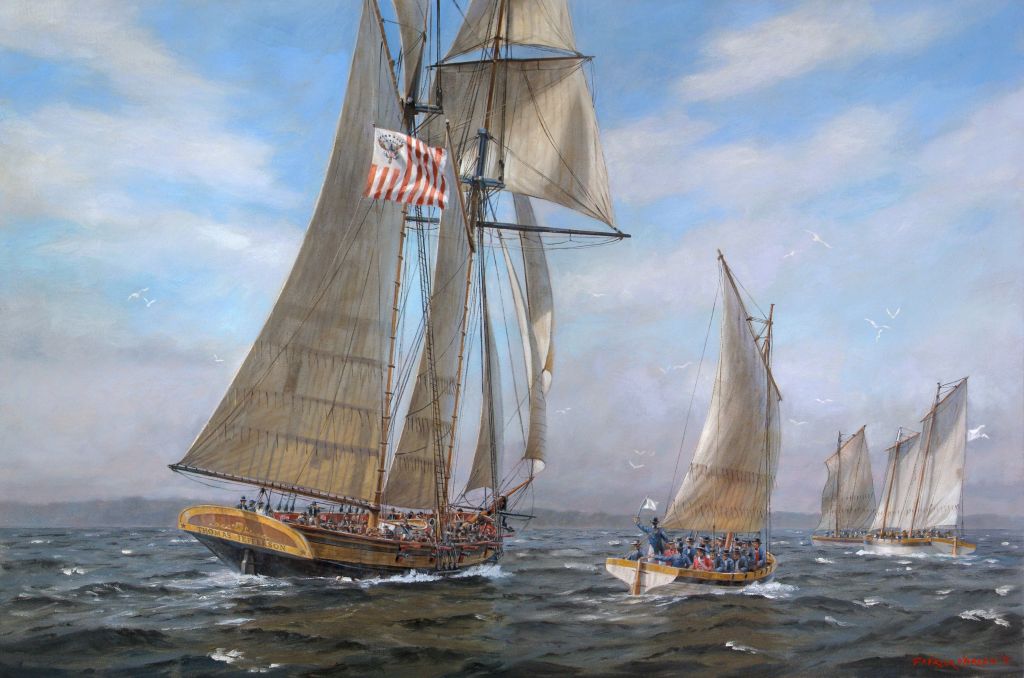
U.S. Naval Institute, U.S. Coast Guard Collection


Leave a Reply