The Treaty of Paris, ratified by the United States Congress on January 14, 1784, is ratified by King George III of the Kingdom of Great Britain, ending the American Revolutionary War.
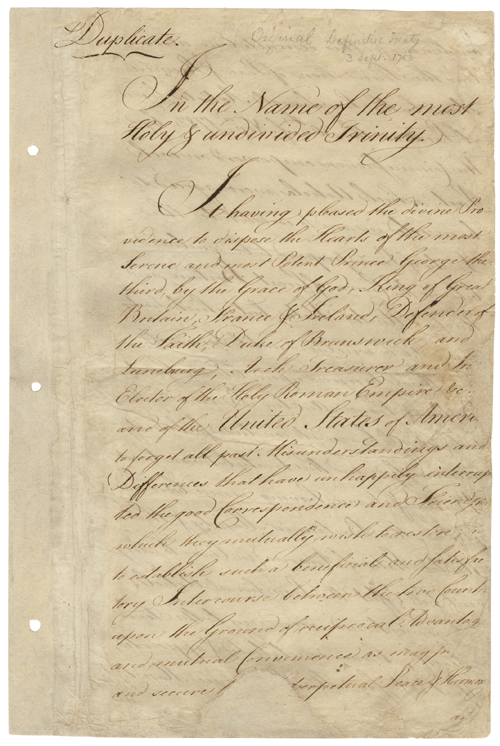
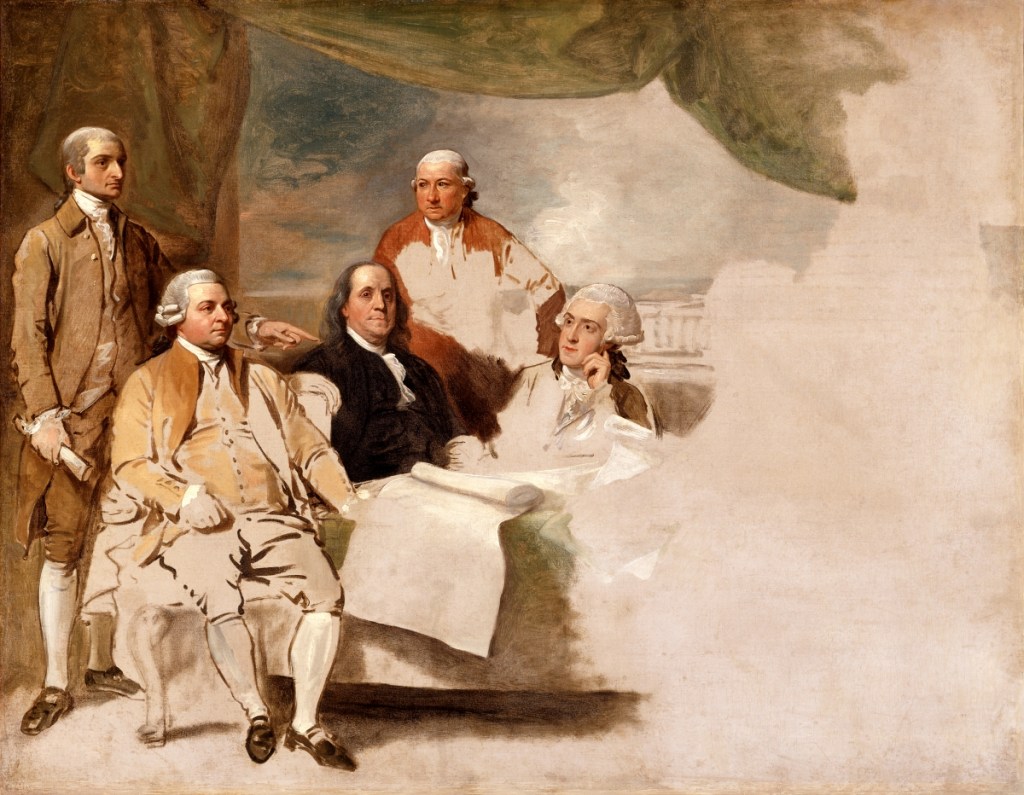
ㅤThe Treaty of Paris, signed on September 3, 1783, by Great Britain and the United States, formally concluded the American Revolutionary War. This landmark agreement recognized the thirteen American colonies as free, sovereign, and independent states, marking a significant turning point in global politics. The treaty effectively ended British rule over these territories, acknowledging the successful struggle for independence waged by the American revolutionaries. Following the signing, copies of the treaty were dispatched to Europe for formal approval by the other nations involved in the broader conflict.
ㅤBeyond recognizing American independence, the Treaty of Paris also established the boundaries between the newly formed United States and British North America, which would later become Canada. While the British considered these boundaries “exceedingly generous” to the Americans, some specific definitions in the far northwest and south remained subject to future disputes. The treaty also addressed crucial details such as American fishing rights in certain areas and the arrangements for the restoration of property and the exchange of prisoners of war. This treaty, along with separate peace agreements Britain made with France, Spain, and the Dutch Republic, is collectively referred to as the Peace of Paris. The first copy of the treaty reached France in March 1784, followed by British ratification on April 9, 1784. The officially ratified versions of the treaty were then exchanged in Paris on May 12, 1784. Notably, only the first article of the Treaty of Paris, which affirms the United States’ independent existence, remains in effect today.
 Paul M. Krueger
Leave a comment