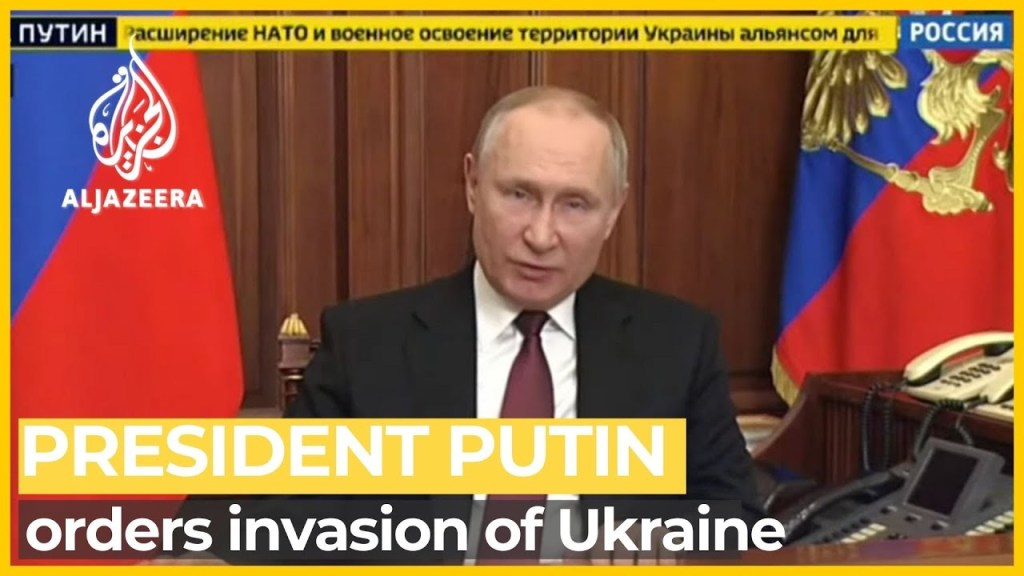
Days after recognizing Donetsk and Luhansk as independent states, Russian president Vladimir Putin orders a full-scale invasion of Ukraine.
ㅤIn February 2022, Russia launched a full-scale invasion of Ukraine, marking a major escalation of the Russo-Ukrainian War that began in 2014. This conflict, the largest in Europe since World War II, has resulted in significant casualties: hundreds of thousands of military deaths and tens of thousands of Ukrainian civilian deaths. By 2025, approximately 20% of Ukraine was under Russian occupation. The invasion forced about 8 million Ukrainians to become internally displaced, and over 8.2 million fled the country by April 2023, creating a massive refugee crisis.
ㅤPrior to the invasion, Russia amassed troops near Ukraine’s borders and demanded that NATO exclude Ukraine. On February 24, 2022, President Vladimir Putin declared a “special military operation,” claiming it was to protect Russian-backed separatist regions in Donetsk and Luhansk. He asserted that the Ukrainian government was neo-Nazi and committing genocide against Russian minorities, and that Russia’s goals were “demilitarization and denazification.” Russian forces launched attacks from Belarus, Crimea, and the Donbas region.
ㅤThe invasion triggered widespread international condemnation and sanctions. The United Nations General Assembly called for a Russian withdrawal, and the International Court of Justice ordered Russia to halt military operations. Many nations provided humanitarian and military aid to Ukraine. The International Criminal Court initiated investigations into war crimes, crimes against humanity, and genocide, and issued arrest warrants for President Putin and other Russian officials. The war has also led to a significant refugee crisis, a global food crisis, and accusations of ecocide.
 Paul M. Krueger
Leave a comment