A man’s first experience with combat is a disconcerting amalgam of fear and excitement. Will I perform honorably? Will I cower in fear? Will I be the first to die? All those thoughts and fears are far outweighed by the uncertainty and impatience over when the fighting will begin. If it’s my time to die, let’s get on with it, already! But no, instead, we are forced to stand here, fully armed and staring down the enemy day in and day out waiting for our reinforcements, and hoping the enemy doesn’t advance.
Rumor has it that we are horribly outnumbered, but since the Persians have yet to fully disembark from their ships, we can’t be sure. My decasteros says the Persians are 200,000 strong, but we only have 10,000 Athenians and about a thousand useless Plataeans. We might as well have ten of them, they would be equally as effective. Meanwhile, we’re forced to wait here facing annihilation since Pheidippides came back from Sparta. Apparently the Spartans decided they cannot send reinforcements until after the festival of Carneia, the sacrosanct period of peace for them. The only problem is, the Persians don’t know or care about Carneia. I will always respect the Spartans for their warrior spirit, but they are so stupid, it fascinates me that they are able to tie their sandals without personal help from Artemis.
As time goes on, I’m not sure our strategoi have any idea what they’re doing either. Strategos Miltiades is the only one we all really trust. However, with every passing hour, every passing day, we aren’t sure he is even in command anymore. While the Persians prepare for combat, we stand in formation hoping they don’t realize we are only killing time waiting for the Spartans.
On the morning of the sixth day of standing in the sweltering heat looking at the Persians, something finally happened. The Persian cavalry was getting back on their ships as if to leave. “We did it!” We said. We were able to scare the Persians away without a single dory thrust. We were wrong.
As soon as the Persians began to load their cavalrymen onto their ships, Strategos Miltiades gave the command to prepare to attack.
“This is insane!” I said. “We’re horribly outnumbered!” I was immediately disciplined by my decasteros for speaking out in formation. I was so angry. What are they thinking? This is it, I’m going to die in combat for no reason. The Persians are retreating and we are on a suicide mission. Great legacy I’ll be leaving. And to make things worse, they rearranged our formation so that the center was only four ranks deep! While the flanks were eight deep. This is ridiculous! They’re going to punch right through our formation! And as the fates would have it, I am right in the middle of the formation.
My first taste of combat was about to begin, and the anticipation grew. The strategoi were all yelling some motivational speech at the front ranks, but I couldn’t hear a thing. I was breathing furiously while my heart was beating so hard I can hear it in my bronze helmet. The sweat from the heat and the tension of the situation combined to drip off my face as if I were crying. But if any tears were coming from my eyes, they were tears of anger, not fear.
The order was finally given to march. Here we go. As we began to march, the Persians haphazardly organized their ranks. They definitely weren’t expecting this. My anger over the poor decisions being made by the strategoi were replaced with anger at the Persians. I remember now why we came to fight. They are trying to invade. They are the conquerors. They are the enemy and Darius is the epitome of evil and must be destroyed!
When we reached the range of their archers, the second order was given. “RUN!” This is the order all hoplites have always wanted to hear but never had. As far as I knew, we never ran into combat, but this time things were different. This was chaos. When we heard the order, we tried to maintain formation the best we could, but the excitement and pure adrenaline of the impending fighting was in command now. We ran into battle shouting our war cries at the top of our lungs. The Persians were noticeably terrified. War has never been waged in this manner. Running and shouting into battle like barbarians? But it worked. When we hit the Persian formation, it was like running into a wall. Except this time, the wall gave in. We were able to reorganize the phalanx the best we could. Thrust, block, advance. Thrust, block, advance. We didn’t have enough men to rotate ranks, so we all just kept moving, pushing, fighting, killing.
All I could see was the man in front of me and the hoplon of the man to my right. With every thrust of my dory, the fatigue in my muscles increased. I was still trying to catch my breath after running and yelling. My feet desperately finding a strong foothold so as not to fall and get trampled by my fellow Greeks. The blood began to pool under my feet as well as dripping down my dory to my hand. At first it began to make my grip slip, but with the dirt being kicked up from the fighting, it quickly began to dry and become sticky. The dried dirty blood of my enemy was now beginning to reinforce my grip.
This is combat. I felt unstoppable, powerful, invincible. I felt like Ares himself. Irrational but victorious.
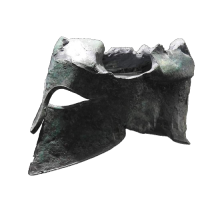
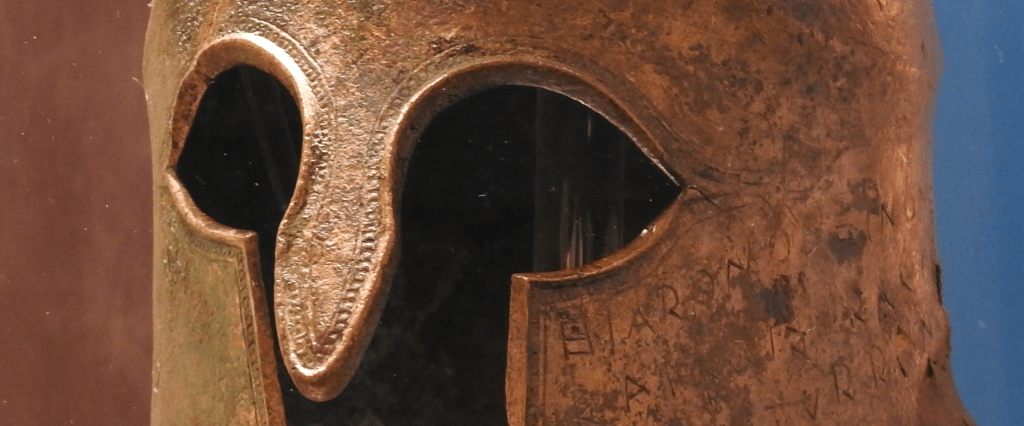
Then a Persian spear hit me and pierced my helmet and I saw nothing but black and couldn’t hear a thing. Just a ringing sound. This is it. I’m dead. It doesn’t even hurt. Then the spear pulled back and I realized that I was alive. The spearhead missed my head and hit the inside of my helmet and pushed it down over my eyes. It must have cut me pretty deep though because the blood was gushing out of my helmet faster than the sweat. But the feeling of relief was quickly dominated by the anxiety and terror of being pushed back by the Persians. I survived a brush with death only to begin to be defeated. Almost the entire first rank was killed in front of me. This might be it.
The more we got pushed back, the harder we fought. Until finally the entire Persian formation was completely surrounded. Miltiades is a genius! He increased the numbers in the flanks and decreased the center so we would get pushed back and the flanks could surround them on the outside! The battle quickly turned from a struggle to a slaughter. The Persian ranks collapsed and we ended up finishing off every last Persian in the formation then began to chase down the retreating Persians and some of us were even able to set fire to some of the Persian ships before they left.
After what seemed to be the entire day turned out to be only a few hours, I realized this is what it felt like to survive combat. And not just survive, but win. We yelled in celebration and thanked Athena for our triumphant victory. The remaining Persians sailed off with their tails between their legs. We did it. Outnumbered and outmatched, we beat the mighty Persian Empire! We didn’t even need the Spartans after all. And after all was said and done, we killed over six thousand Persians and only lost around two hundred Greeks. This was not only a victory, but a massacre. They didn’t stand a chance!
The celebrations came to a quick halt when the Persian ships began to sail away and the strategoi impatiently instructed us to form up. What was happening? We won. What are we going to do? March to Persia? We joked about taking Darius himself prisoner and marching him back to Athens as a war trophy. We were only half right. We weren’t going to Persia, but we were going back to Athens. Except we weren’t marching back.
The strategoi issued their orders to run back to Athens. We are used to running long distances, but not this far. Twenty-six miles? We aren’t messengers like Pheidippides. And we absolutely weren’t used to running long distances after one of the most intense battles imaginable.
I didn’t know it at the time, but it turns out they called our bluff. The Persians were beginning to embark their ships not to sail back to Persia, but to Athens. Someone must have figured out that all the fighting age men of Athens were here on the plains of Marathon. Meaning Athens itself was left completely undefended. Our only option left was to attack. Had I known that, I wouldn’t have been so angry at the strategoi. However, it was that anger that helped me run faster and fight harder. I guess that’s why I’m the hoplite and not the strategos.
But it wasn’t until well after that battle when we found out what was actually happening. Unfortunately it turns out the remaining Persians actually were going to try to take Athens after all. They started sailing south instead of north, back to Persia. This is what we were trying to prevent, but all we did was slow them down a little while.
Either way the Persians would still have had to sail all the way around Attica to get to Athens, so if we ran across from Marathon, we had a chance at beating them to Athens and fighting them again. A chance to win again!
We felt unbeatable after that victory. We felt like we could easily take on the rest of the Persian Empire ourselves. We sprinted the first few miles. Helmets in hand, hoplons on our backs, we rattled into the hills. Some of us raced each other, others laughed, while some were genuinely worried about their families in Athens and yet others were so physically exhausted they couldn’t keep up.
The sun began to get lower and lower by the time we reached sight of Athens. After hours and hours of running and after hours of fighting and days of waiting, my knees were in horrible pain, the bottoms of my feet throbbing and my shoulders excruciating. And even though I drank water whenever I had the chance, I stopped sweating hours ago. The closer I get, the farther it seems. Some of the other hoplites have already made it to the city. I have no idea if the Persians are there or whether or not they are fighting. I don’t think I have the energy to fight. I feel like I am about to collapse.
When I finally reach the city, several decasterœ are instructing us to form up lining the long walls leading to the ports and wait for orders. When I got out to the walls I saw thousands of reinforcements. Did the Spartans finally arrive? No, they were women, boys and old men wearing hoplite armor. This was nothing more than a show of force. A show of force that worked. Because within the hour, several Persian ships approached the ports and saw us on the walls, fully armed and ready to fight. But we weren’t ready to fight. We were barely standing. But seeing us all flanked by what appeared to be reinforcements was enough to make the Persians turn around and sail away. Hopefully they went back to Persia. Maybe they went to Sparta. Who cares? We kicked them off of the beaches of Marathon, and kept them from landing in Athens.
As we walked back to the city from the walls, I felt relieved. I felt proud. I did my part to protect Athens. I did my part to protect all of Greece. For my first combat experience as a hoplite, I have cemented my legacy in my city and brought honor to my family name. But I was too tired to celebrate. Too weary and dehydrated to even stand anymore. During the celebration, I fell to the ground in exhaustion, but felt comfortable and couldn’t feel the pain in my body anymore. I had an overwhelming feeling of relaxation as I slowly closed my eyes. This was our great victory. Athena was surely with us today.
Nike!
-Unknown Hoplite, 490 BCE
Decasteros (decasterœ pl.): Low ranking military leader, usually in charge of a small number of hoplites. Assistant to next level leader (decadarchos.) Comparable to a Corporal in the modern military.
Plataea: An ancient city located in Greece in southeastern Boeotia, south of Thebes.
Strategos (strategoi pl.): Literally meaning “army leader” used in Greek to mean military general.
Artemis: Hellenic goddess of the hunt, wild animals, wilderness, childbirth, virginity and protector of young girls, bringing and relieving disease in women; she often was depicted as a huntress carrying a bow and arrows. Spartans used to sacrifice to her as one of their patron goddesses before starting a new military campaign.
Dory: Spear that was the chief armament of hoplites in Ancient Greece. The dory was about three meters in length (ten feet) and had a handle with a diameter of 5 cm (two inches) made of wood. The flat leaf-shaped spearhead was composed of iron and its weight was counterbalanced by a bronze butt-spike.
Phalanx: Ancient Greek rectangular mass military formation usually composed entirely of heavy infantry armed with spears, pikes, sarissas, or similar weapons.
Hoplite: Citizen-soldiers of Ancient Greek city-states who were primarily armed with spears and shields.
Hoplon: The heavy wooden shield, some with a thin sheet of bronze on the outer face, used by the infantry (hoplites) in Ancient Greece.
 Paul M. Krueger
Leave a comment